
HOLE 9: STEAM POWER
VICTORIAN TRANSITION TO STEAM POWER:
The change to steam power was one of the most transformative developments of the Industrial Revolution.
Before steam, most factories relied on water wheels for power, which limited their location to riverbanks. The invention and refinement of the steam engine allowed factories to be built anywhere, especially near coal supplies and labour forces.
Steam engines powered machines in textile mills, ironworks, and other manufacturing sectors. Production speed and efficiency greatly increased, helping mass production become viable.
Transport was improved with the development of steam locomotives and steamships.
This all meant that there was a larger demand for coal, with its high energy density and suitability for high-temperature combustion, to create steam, which became the dominant energy source.
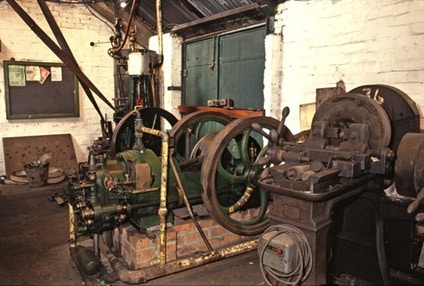
Creating the steam:
To create the steam, the coal is burnt at an intense heat, which transfers to a large tank of water in a boiler. As the water heats up, it turns into pressurised steam, which builds up inside the boiler until being released into the engine’s cylinders or turbines. The steam then enters a piston or turbine system, pushing the pistons back and forward or spinning the turbines, converting the thermal energy into mechanical energy. The steam is then released.