
HOLE 16: THE PRESS
PRINTING IN VICTORIAN TIMES:
In Victorian times, the printing industry in Somerset, like in much of Britain, underwent significant development as part of the broader Industrial Revolution.
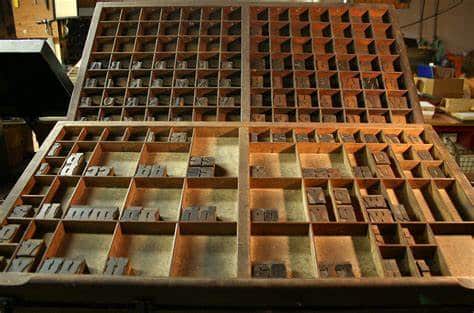
At the start of the Victorian period, printing was typographic, meaning it relied upon small metal or wooden letters that would be organised into sentences. A Victorian printer would take their type, create the writing they wanted to print, and then rest it face up on the bed of the press. They’d gently dab it with ink (enough so the raised letters would leave an impression, but not so much that it would drown out the letter), then add paper to the top. The paper would then be mechanically pressed down on the inked type. Type would be stored in a case, with capital letters at the top and smaller letters at the bottom, and we still refer to these type sets as “upper-case and the lower-case letters” to this day.
Printing and bookmaking became a significant industry, and one local firm of note was Purnell & Sons. Founded in 1889 by Charles Dando Purnell in Paulton, the business grew rapidly with the help of his sons and expanded into Radstock and Midsomer Norton. It started as a small backyard operation and grew into a major employer, with 1,500 staff at its peak, eventually becoming a limited company in 1935. In 1998, it was acquired by the Polestar Group, becoming part of the UK’s largest independent printing company.